Let’s be honest, you didn’t wake up one day craving “ammonia diffusion patterns” or “oxidation gradients.” You just wanted that effortlessly sun-kissed glow… the kind that whispers “I vacation in coastal Italy” even if you’ve only been to your balcony. But here’s the twist: every stunning strand of hair color is actually a tiny chemistry …

Let’s be honest, you didn’t wake up one day craving “ammonia diffusion patterns” or “oxidation gradients.” You just wanted that effortlessly sun-kissed glow… the kind that whispers “I vacation in coastal Italy” even if you’ve only been to your balcony.
But here’s the twist: every stunning strand of hair color is actually a tiny chemistry lab in action.
When you choose between balayage and traditional highlights, you’re not just picking a look, you’re choosing how chemicals interact with your hair’s structure, how pigments are lifted, and how light reflects off your strands. Yes, your hair has layers emotionally and scientifically.
So if you’re considering Balayage hair color in Palm Desert, or just trying to decode salon jargon without nodding blindly, this guide is your cheat sheet. And don’t worry, we’ll keep it smart and fun.
The Chemistry of Application: Freehand Diffusion vs Foil Saturation
Here’s where things get scientific.
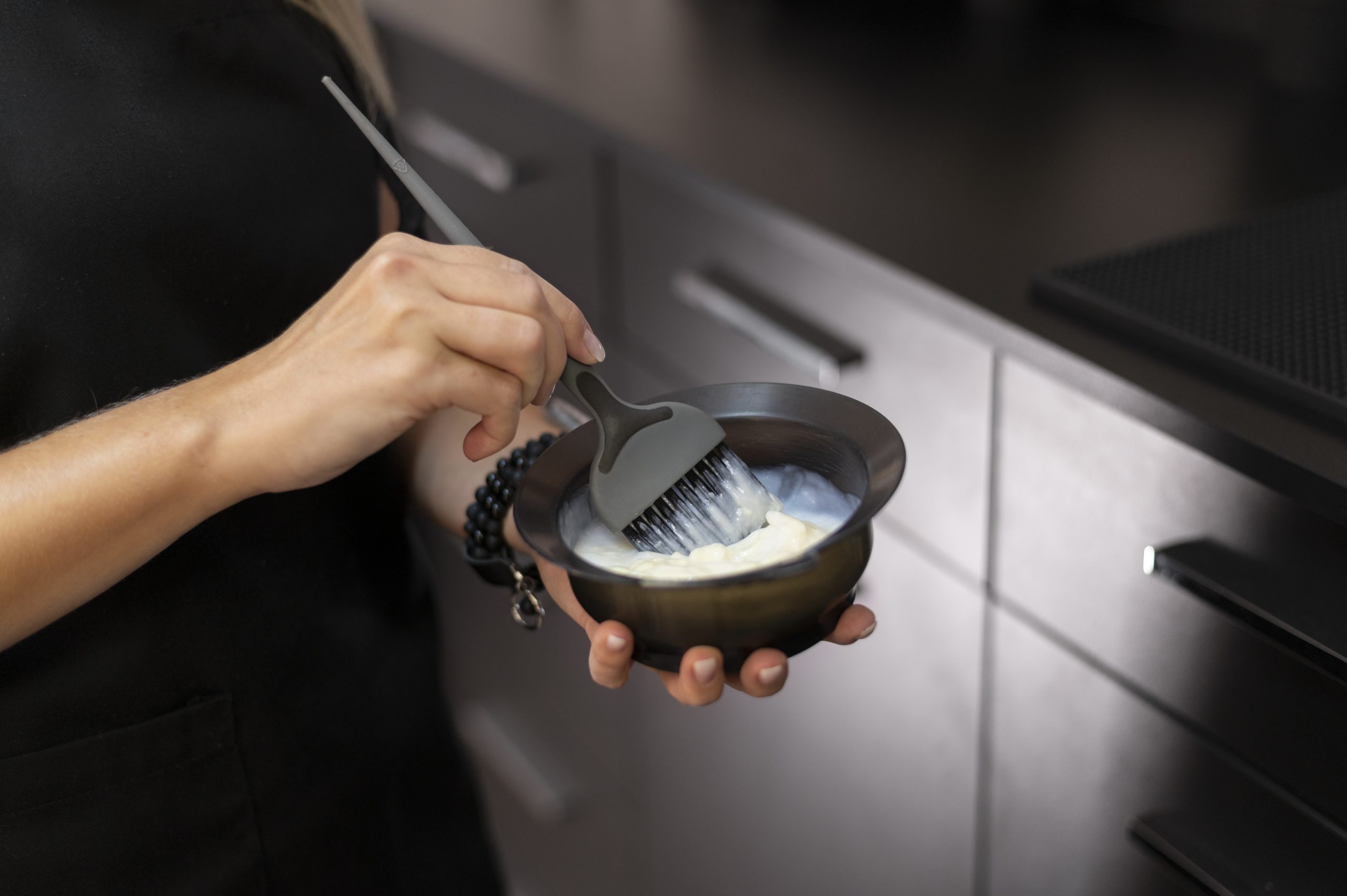
With balayage, your colorist hand-paints lightener onto the hair surface. This creates uneven saturation zones, meaning some strands absorb more product while others absorb less. The result? A diffused chemical reaction that lifts color gradually.
On the other hand, traditional highlights use foils. Foils trap heat and accelerate oxidation, forcing the lightener to penetrate deeply and uniformly into each strand.
What this means for you:
- Balayage = softer chemical processing, less aggressive lift
- Highlights = controlled, intense lightening with higher precision
Think of balayage as watercolor… and highlights as a high-definition printer.
Pigment Breakdown: Controlled Lift vs Gradient Lightening
Hair lightening is all about breaking down melanin, your natural pigment.
With traditional highlights:
- The lightener fully saturates selected strands
- Melanin is lifted evenly from root to tip
- You get consistent brightness throughout
With balayage:
- Lightener is applied unevenly
- Melanin breaks down in a gradient pattern
- Ends are lighter, mid-lengths softer, roots remain natural
Why this matters:
Balayage creates a multi-tonal effect because the chemical reaction isn’t uniform. That’s why it looks more natural, your hair mimics how the sun would lighten it over time.
Heat and Oxygen: Why Foils Create Drama
Let’s talk about heat because your hair definitely feels it.
Foils in traditional highlights:
- Trap heat and oxygen
- Speed up the chemical reaction
- Push hair to lift several levels lighter
Balayage:
- Open-air processing
- Slower oxidation
- Less extreme lift
Translation for you:
- Highlights = bold, high-contrast color
- Balayage = soft, blended transitions
If you’ve ever wondered why highlights can look “stripy” while balayage melts seamlessly; it’s all about oxygen exposure and heat control.
Hair Cuticle Behavior: Uniform Swelling vs Selective Expansion
When lightener is applied, your hair cuticle opens up so chemicals can penetrate.
Traditional highlights:
- Cuticles open uniformly
- Entire strands swell and process evenly
Balayage:
- Cuticles open selectively
- Only certain sections of each strand are affected
Why you care:
This selective expansion is what gives balayage its dimension and depth. It’s not just color; it’s controlled inconsistency (the good kind).
Grow-Out Science: Seamless Blending vs Harsh Demarcation
Ever noticed how some color grows out gracefully… and some just screams “salon overdue”?
That’s chemistry again.
Traditional highlights:
- Start at the root
- Create a clear line where new hair grows
- Require frequent touch-ups
Balayage:
- Avoids the root area
- Uses gradual pigment transition
- Blends naturally as your hair grows
Result:
Balayage gives you that low-maintenance luxury everyone talks about.
If your lifestyle says “I forget to water plants,” balayage is your soulmate.
Conclusion: So… Which Chemistry Works for You?
At the end of the day, your choice isn’t just about trends; it’s about how you want chemistry to behave on your hair.
- Want bold, structured brightness? → Highlights
- Want a soft, sun-kissed dimension? → Balayage
And if you’re leaning toward that effortless, lived-in glow (you know, the one that makes people ask “Wait, is that your natural color?”), then Balayage hair color in Palm Desert might be exactly your vibe.
Ready to stop guessing and start glowing?
Book your personalized color transformation with the experts at RobertsOfCourse
Because your hair deserves more than just color; it deserves chemistry that works for you, not against you.
Book an Appointment
It’s easy and free!